Ecoflow River 2 Portable Power Station Specs, Features, and Value: Is it worth the price tag?
Category: Electronics
Introduction
The EcoFlow River 2 is a compact portable power station aimed at weekend campers, van lifers, emergency-preparedness buyers, and anyone who needs lightweight, reliable battery backup without the bulk of larger units. With lithium iron phosphate (LiFePO4) chemistry, a fast AC recharge mode, and a relatively small footprint, the River 2 is marketed as a lighter, longer-life alternative to entry-level portable batteries. This review examines the River 2’s official specifications, real-world performance expectations, notable features, and typical buyer considerations to help the reader determine whether it delivers fair value for the price.
Official specifications (summary)
The following is a concise specification overview for quick reference, summarizing the manufacturer’s figures and common product listings:
- Battery capacity & chemistry: 256 Wh (approx. 20 Ah at 12.8 V), LiFePO4 (LFP)
- AC output (continuous / surge): 300 W continuous, 600 W peak (pure sine wave)
- Outputs: 2 AC wall outlets (region-dependent), USB-C (60 W PD), multiple USB-A ports, 12 V car/12.6 V DC port
- Inputs / charging: AC fast charge (X-Stream), solar MPPT input up to ~110 W, car input; USB-C input supported
- Charging time: AC fast-charge to full in about 60 minutes (manufacturer X-Stream spec); solar/car times vary with conditions (~3 hours typical for solar under ideal panels)
- Cycle life: LiFePO4 rated for 3,000+ cycles to ~80% capacity
- Dimensions & weight: compact footprint (~245 x 215 x 145 mm / ~9.6 x 8.5 x 5.7 in), weight approximately 3.5 kg (7.7 lbs)
- Display & controls: LCD for battery %, input/output watts, mode; BMS for temperature/current/voltage protection
Detailed product review and analysis
Build quality and design
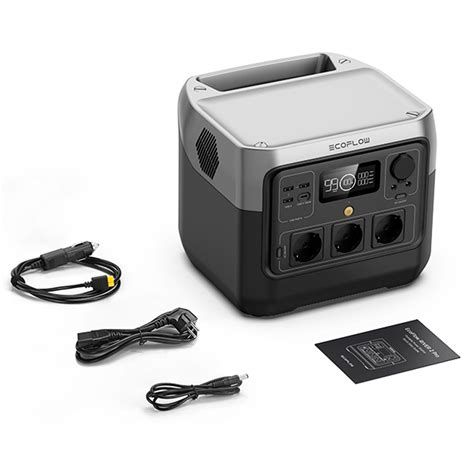
The River 2 follows the design language of modern portable power stations: a molded plastic shell with a built-in carrying handle, a clear front LCD, and grouped ports for easy access. The compact dimensions make it easy to stow in a car trunk or camper cubby. LiFePO4 cells add a modest weight penalty over some high-energy-density NMC packs, but they repay that with a longer lifecycle and improved thermal stability, which is important for safety and longevity.
Battery chemistry and longevity
LiFePO4 chemistry (LFP) is a strong selling point for buyers focused on lifecycle and long-term cost of ownership. Rated for more than 3,000 cycles to 80% capacity, this chemistry typically translates to many years (often 8–10+) of daily or frequent use before capacity becomes a clear limitation. For infrequent users or people who plan to keep a power station for several years, the LFP choice reduces the need to replace the battery pack sooner than with some other chemistries.
Power output and practical limits
The 300 W continuous AC output places the River 2 in the “light-duty” category. It comfortably runs phones, laptops, lights, small fans, CPAP machines (depending on model and settings), and small kitchen devices like low-wattage blenders or induction cookers with careful load management. The 600 W surge rating helps with short motor starts or inrush currents, but sustained loads above 300 W will either overload the unit or throttle runtime quickly.
Discover deals on Electronics — updated daily.
See Deals →Practical use cases that match the River 2’s profile include:
- Charging multiple phones, tablets, and a laptop during a day of remote work at a campsite.
- Powering LED camp lights, a small 12 V cooler, and charging devices overnight.
- Providing short-term emergency backup for a router, phone chargers, and a small refrigerator for a few hours.
- Running sensitive electronics thanks to the pure sine wave inverter for clean power output.
Charging flexibility and speed
EcoFlow’s “X-Stream” AC fast-charge capability is one of the River 2’s headline features. The manufacturer advertises a roughly 60-minute full recharge from AC, which is an attractive convenience when the user returns home after a day out and needs the battery ready quickly. Solar charging (MPPT) at around 110 W makes the unit suitable for day-use recharging under good sunlight; expect longer durations on cloudy days or with smaller solar panels. The unit’s support for USB-C PD input is helpful for topping up from modern laptop power bricks or USB-C chargers.
Port selection and usability
Real-world buyers care about the right combination of ports. The River 2 typically includes two AC outlets, a high-power USB-C PD port (60 W), several USB-A ports for legacy devices, and a 12 V car-style output. This mix covers most consumer needs without overcomplicating the interface. The LCD provides instantaneous feedback on input and output power and battery percentage, which is useful for load planning during off-grid use.
Safety and management
The built-in BMS manages over-voltage, under-voltage, over-current, short-circuit, and thermal protection. LiFePO4 chemistry combined with these protections means a good safety profile for indoor use, RVs, and vehicles—assuming correct ventilation and manufacturer usage guidelines are followed.
Real-world performance notes
- Expect actual runtime to be lower than theoretical numbers listed on spec sheets due to inverter losses (typically 10–15%) and environmental factors like temperature.
- AC fast-charge is convenient but slightly accelerates wear if used constantly as the primary charging method; occasional use balances convenience and longevity.
- Solar recharging performance depends heavily on panel quality, orientation, and weather—buyers should plan conservatively.
- Weight and footprint are trade-offs: compact and portable but not intended as a household backup for long-duration outages.
Preserved source summary from specification lookup
Here are the official specifications for the EcoFlow River 2 Portable Power Station:

Battery Capacity & Chemistry

Capacity: 256Wh (20Ah, 12.8V)
Battery Type: LiFePO4 (Lithium Iron Phosphate, LFP)
Battery Life: 3,000+ cycles to 80% capacity (about 8–10 years of regular use)[1][2].

Rated/Peak Output

AC Output: Pure sine wave, 300W continuous, 600W peak (surge) total output (120V, 50Hz/60Hz selectable)[1][2].

Output Ports

AC Ports: 2 x 120V (US Version)[1]
USB-A: 2 or 3 ports (12W each, 5V 2.4A max per port, models may vary slightly)[1][3][4]
USB-C: 1 port (5/9/12/15/20V, 3A, 60W Max)[1]
Car Port (DC5521/Car Outlet): 12.6V, 8A, 100W Max
Total Outputs Supported: Power up to 6 devices simultaneously

Input / Charging Methods

AC Input: 100–120V~ 50/60Hz, 8A Max (X-Stream fast charge)
Solar Input: 11–30V, 8A, 110W Max (MPPT)
Car: 12/24V, 8A Max (100W Max)
USB-C Input: 5/9/12/15/20V 3A, 60W Max

Charging Times

AC Charging: 0% to 100% in about 60 minutes (X-Stream Fast Charge)[3][5]
Solar Charging (110W panel): About 3 hours (sunlight dependent)
Car Charging: About 3–4 hours

Dimensions & Weight

Dimensions: ~9.6 x 8.5 x 5.7 in (245 x 215 x 145 mm) (exact size varies depending on regional version)[1][6]
Weight: ~7.7 lbs (3.5 kg)

Other Features

LCD display for input/output wattage, battery %, etc.
Built-in handle for easy carry
Smart Battery Management System (BMS) for safety, voltage, current, and temperature control
App control via Bluetooth/WiFi (EcoFlow app)
Warranty: 5 years

Summary Table

Feature	Specification
Battery Chemistry	LiFePO4 (LFP)
Battery Capacity	256Wh (20Ah, 12.8V)
Rated/Peak Output	300W (600W Surge)
AC Output	2 x 120V outlets (pure sine wave)
USB Output	USB-C (1 x 60W), USB-A (2–3 x 12W)
DC Output	Car port (1 x 100W)
Weight	7.7 lbs (3.5 kg)
Dimensions	~9.6 x 8.5 x 5.7 in (245 x 215 x 145 mm)
Charging Times	1h (AC), ~3h (solar/car)
Cycle Life	>3,000 cycles to 80%+ capacity
Pros & Cons
- Pros
- LiFePO4 chemistry provides long cycle life and better thermal stability.
- Fast AC recharge (X-Stream) — convenient when frequent quick turnarounds are needed.
- Compact, lightweight design for easy transport and car-camping use.
- Pure sine wave AC output suitable for sensitive electronics.
- Good mix of modern ports (USB-C PD) and legacy ports (USB-A, car outlet).
- Cons
- 256 Wh capacity limits runtime for heavier AC loads — not ideal for extended home backup.
- 300 W continuous inverter restricts use with high-wattage appliances.
- Solar MPPT input is modest (around 110 W), so full solar recharges can require ideal conditions.
- Higher upfront cost per Wh compared with simple power banks or older lead-acid options.
Comparison (when relevant)
For buyers deciding between small portable stations, it is useful to compare the River 2 to other compact models in the same class. The table below highlights common decision points rather than brand-specific endorsements.
| Feature | EcoFlow River 2 | Typical Small Competitor (example) |
|---|---|---|
| Battery capacity | ~256 Wh | 200–300 Wh |
| Chemistry | LiFePO4 (LFP) | Often NMC or LFP depending on model |
| AC continuous | 300 W | 200–500 W (model dependent) |
| AC fast-charge | Yes (~60 min) | Variable; fewer models offer true fast full recharge |
| USB-C PD | 60 W | 45–100 W depending on unit |
| Weight | ~7.7 lbs (3.5 kg) | 6–10 lbs |
| Best use case | Day camping, device charging, short emergency backup | Similar; depends on inverter size & battery chemistry |
Buying guide: who should consider the EcoFlow River 2?
Good fit
- Weekend campers and van users who need a light, transportable power source for electronics and small appliances.
- Remote workers who want a reliable laptop/phone charging station while on location with occasional runs of USB-powered monitors and lights.
- Preparedness-minded buyers desiring a compact emergency pack with a long-lasting battery chemistry.
- Users who value fast AC recharge when access to mains power is available.
When to look elsewhere
- Households that want multi-day whole-fridge backup or to power heavy appliances — a larger-capacity power station (1000 Wh+) with a higher-watt inverter is needed.
- Users who require sustained high-wattage AC output (e.g., microwaves, electric heaters) should choose a unit with a 1000 W+ inverter.
- Buyers on strict budgets who prioritize cost per watt-hour above cycle life — cheaper chemistry packs can offer lower upfront cost per Wh but will likely need replacement sooner.
Key purchase considerations
- Capacity vs. weight: Choose the smallest capacity that meets daily needs to keep weight manageable for portability.
- Port layout: Confirm the number and types of outputs match typical device needs (e.g., will a single 60 W USB-C be enough to charge a laptop at full speed?).
- Solar workflow: If the intention is to use solar often, consider the station’s MPPT input limit and whether parallel panels or a larger station are preferable.
- Longevity: LiFePO4 chemistry is ideal for frequent use and long shelf-life; if longevity is a priority, favor LFP-equipped models.
- Warranty and support: Check manufacturer warranty length and terms, and local support options for service or replacement.
Real-world use case scenarios
Scenario 1 — Weekend camping trip
A couple spends a weekend camping with a small electric cooler, LED lighting, phones, and a laptop for a few hours. The River 2 can run lights and charge small devices all evening and into the night; the cooler and laptop combined will consume a significant portion of the 256 Wh pack, so conservative use (switching devices off when not needed) is recommended. Solar recharging during daytime may top the unit back to useful levels if panels are available.
Discover deals on Electronics — updated daily.
View Offers →Scenario 2 — Mobile photography shoot
A photographer needs to charge multiple camera batteries, a laptop, and a couple of phones at a remote location. The USB-C PD port and multiple USB-A ports are helpful; the 60 W PD port will charge many laptops at a reasonable speed. If camera battery chargers draw high wattage, multiple charge cycles or a larger pack may be necessary.
Scenario 3 — Short home outage
During a brief power interruption, the River 2 can keep routers, phones, LED lights, and small medical devices running for several hours. It is not intended to replace whole-home backup, but it is a useful stopgap to maintain connectivity and essential electronics for short durations.
Conclusion
The EcoFlow River 2 is a well-engineered compact power station that balances portability, modern port selection, and longevity thanks to LiFePO4 chemistry. It is best suited to users with light-to-moderate power needs — campers, remote workers, and those seeking short-term emergency backup or a convenient travel companion. The standout appeal is the combination of a long cycle life and fast AC recharge, which helps justify a higher per-Wh cost for users who expect frequent use over several years.
Buyers who expect to run heavy AC loads, need multi-day household backup, or require a highest-capacity, lowest-cost-per-Wh solution should consider larger units or different form factors. For its intended audience, however, the River 2 represents a compelling feature set: dependable chemistry, rapid recharge capability, and a compact, user-friendly design. Whether it is worth the price tag depends largely on usage patterns — for frequent users who value longevity and quick recharge, it can be an excellent investment; for occasional or heavy-power shoppers, other options may be more economical.