The Truth About the Turtle Beach Velocityone Race Kd3: Pros, Cons, and Verdict
Overview: The Turtle Beach VelocityOne Race Kd3 positions itself as a competitive choice in the sim-racing accessory market, aiming to bridge the gap between entry-level wheels and high-end direct-drive systems. This article examines how the VelocityOne Race Kd3 performs in practical use, what buyers typically care about, and whether it represents good value for a range of users—from casual racers to serious sim enthusiasts.
Introduction
Sim racing peripherals have matured rapidly over the past decade. Modern wheels are judged not only on force feedback intensity but also on build quality, pedal fidelity, ergonomics, compatibility, and software support. Buyers often want a product that feels convincing on track, integrates cleanly with their rig or console, and stands the test of time. The VelocityOne Race Kd3 arrives in this context, promising an experience tailored to realistic racing without the cost and complexity of a top-tier direct-drive setup.
This review breaks down the product's real-world strengths and weaknesses, gives practical comparisons with common alternatives, and offers a buying guide so prospective purchasers can decide if the VelocityOne Race Kd3 aligns with their needs.
Detailed Product Analysis
Design and Build Quality
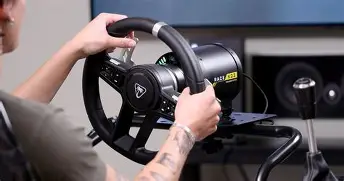
The VelocityOne Race Kd3 adopts a design ethos aimed at balancing durability and ergonomics. The wheel rim, mounting points, and control cluster are crafted to withstand repeated use without excessive flex. For sim racers who mount their wheel to a desk or a dedicated cockpit, the sturdiness of the clamps and the stability of the base are crucial in preventing wobble during aggressive inputs; the KD3's structure is generally adequate for both mounting styles when set up correctly.
Button placement and paddle shifters are arranged for intuitive access during high-stress racing situations. The paddles typically offer positive, tactile feedback, which helps with fast shifts in manual or sequential modes. The layout accommodates users who run mixed disciplines—the wheel is usable for open-wheel, GT, and touring car titles alike.
Force Feedback and Driving Feel
Force feedback (FFB) is the headline feature for any racing wheel. The VelocityOne Race Kd3 aims to deliver a step-up from entry-level belt-driven wheels by offering a clearer translation of road texture, tyre slip, and steering forces. Instead of relying on raw torque numbers, what matters in daily use is the fidelity and smoothness of the feedback. The KD3 emphasizes a faithful sensation of grip and loss-of-grip cues, which helps drivers detect when a car is about to understeer or oversteer.
In practice, the wheel provides a convincing middle ground: more nuanced than budget alternatives, but not as instantaneously responsive as premium direct-drive systems. For most racing titles—especially popular console and PC sims—the feel is realistic enough to improve lap consistency and driver confidence.
Pedal Set and Inputs
Pedals influence cornering and braking precision more than most users realize. The VelocityOne Race Kd3 package often includes a pedal set tuned for general use, with considerations for travel, progressive resistance, and anti-slip surfaces. Buyers who prioritize high-performance braking (for trackdays or competitive sim racing) should evaluate whether the stock pedals meet their expectations; many upgrade to load-cell brake pedals for improved modulation and consistency under hard braking.
Find top-rated Electronics products at great prices.
Browse Now →The KD3 supports additional input options—such as external shifters and handbrakes—through standard connectors, allowing incremental upgrades as a user’s budget or skill grows.
Compatibility and Software
Compatibility is a frequent concern: users want to know whether a wheel will work on their preferred platform out of the box. The VelocityOne Race Kd3 targets mainstream platforms and modern simulators, but buyers should confirm exact platform support with manufacturer documentation before purchase.
On the software side, the KD3 offers configuration tools that let users tune force feedback strength, steering range, deadzones, and button mapping. The quality of these utilities matters for dialling in a setup that matches a driver’s style; accessible, well-documented software makes the wheel far easier to live with than one that requires deep technical tweaks or community workarounds.
Real-World Use Cases
Several buyer archetypes benefit from the VelocityOne Race Kd3:
- Casual and hobbyist sim racers: Those who play for fun on weekends and want an upgrade over a gamepad find the KD3 offers a meaningful improvement in immersion and lap times without a severe learning curve.
- Streamers and content creators: The unit’s aesthetic and control cluster make it simple to operate on-camera, and reliable button mapping helps switch between games and overlays on the fly.
- Sim-cockpit builders: Users constructing a mid-range rig can integrate the KD3 as a central component and incrementally upgrade pedals or add accessories later.
- Competitive newcomers: Racers moving from entry-level wheels to more precise hardware will appreciate the KD3’s clearer feedback cues without immediately investing in a direct-drive base.
Pros & Cons
- Pros:
- Strong step-up in feedback fidelity compared to basic belt-driven wheels
- Sturdy build and ergonomic button layout suitable for long sessions
- Flexible upgrade path—supports aftermarket pedals and peripherals
- Software customization allows tuning for different simulators and driving styles
- Designed to suit a wide range of real-world users, from casual players to committed hobbyists
- Cons:
- Not as immediate or high-fidelity as premium direct-drive systems
- Stock pedals may not satisfy drivers who require load-cell braking or advanced pedal feel
- Compatibility nuances may require checking platform support before buying
- May require additional accessories for serious competition-level setups, raising total cost
Comparison Table
| Feature | Turtle Beach VelocityOne Race Kd3 | Entry-Level Belt Wheel (Typical) | Premium Direct-Drive Wheel (Typical) |
|---|---|---|---|
| Force Feedback Fidelity | Detailed and nuanced for its class | Basic, sometimes rubbery | Highest fidelity, immediate response |
| Build Quality | Solid, cockpit-ready | Plastic-heavy on many models | Premium materials and robust construction |
| Pedal Quality | Functional stock pedals; upgradeable | Often simplistic potentiometer pedals | High-end load cells and adjustability |
| Price Tier | Mid-range | Budget | High-end |
| Upgrade Path | Good—supports accessories | Limited | Excellent—ecosystem-based |
| Best For | Serious hobbyists and intermediate racers | Casual gamers | Competitive sim racers and professionals |
Practical Considerations Before Buying
Prospective buyers should think through several practical points before deciding on the VelocityOne Race Kd3. These considerations reflect the real-world priorities that most purchasers bring to the table.
1. Platform and Game Compatibility
Confirm that the wheel supports the exact platforms and titles intended for use. Some products offer out-of-the-box support for multiple consoles and PC, while others may be PC-first or require firmware updates for full console compatibility. Buyers who play across platforms should verify cross-platform functionality to avoid disappointment.
2. Mounting and Space
Assess whether the wheel will be mounted on a desk or in a dedicated cockpit. The KD3 is built to be stable in both scenarios, but desk mounts require sufficient clamping surface and clearance. Cockpit users should confirm the base dimensions fit their wheel stand or rig mounting points.
3. Pedal Needs and Upgrade Costs
Think about braking performance: for many real-world sim sessions, pedal feel is as important as the wheel. If a buyer expects to push into competitive territory, budgeting for a load-cell brake pedal or a higher-end pedal set sooner rather than later will deliver the most noticeable lap time improvements.
Shop the latest Electronics picks on Amazon.
See Deals →4. Software and Tuning
Investigate the tuning options available through official software. Adjustable force feedback profiles, steering angle limits, and button remapping are valuable for personalizing the experience across different cars and tracks. Software that is regularly updated and has responsive manufacturer support improves long-term satisfaction.
5. Long-Term Support and Community
Check how active the product community and manufacturer support channels are. Community-created profiles and guides can help squeeze more performance from a wheel, and active firmware updates help maintain compatibility with new game releases.
Buying Guide: How to Decide if the VelocityOne Race Kd3 Is Right
The following checklist helps to match buyer priorities with what the Turtle Beach VelocityOne Race Kd3 offers.
- Budget vs. Performance: If the buyer seeks a clear performance upgrade over budget wheels but cannot afford or does not want the complexity of a direct-drive system, the KD3 occupies that middle ground well.
- Use Case: For users who race primarily for fun and occasional competition, the KD3’s balanced feedback and ergonomics will likely suit them. For pro-level sim racers who require razor-sharp feedback and professional peripherals, a higher-tier solution may be preferable.
- Upgrade Plans: If the buyer plans to keep the wheel long-term and upgrade pedals or shifters incrementally, select a wheel that supports standard connectors and mounting points. The KD3 is generally accommodating to this approach.
- Space and Mounting: Desk users should verify clamp compatibility; cockpit users should confirm bolt patterns and dimensions. If portability between setups is a priority, consider the wheel’s weight and ease of detaching.
- Warranty and Support: Look at the warranty period and the ease of obtaining replacement parts or service. Reliable support reduces downtime and protects the investment.
Verdict and Final Thoughts
The Turtle Beach VelocityOne Race Kd3 is an appealing option for buyers seeking a meaningful upgrade from entry-level wheels without committing to the expense or complexity of direct-drive hardware. It combines thoughtful ergonomics, solid construction, and a force feedback system tuned to provide useful, track-relevant cues. These qualities make it a strong contender in the mid-range market segment.
However, potential buyers should be realistic about their goals. The KD3 will not match the immediacy and absolute force fidelity of high-end direct-drive systems, nor will its stock pedals satisfy every competitive driver. For many users, though, those trade-offs are acceptable given the cost-to-performance balance and the ability to upgrade elements of the system over time.
In summary, the VelocityOne Race Kd3 is best for sim-racers who want improved immersion and control compared with entry-level peripherals, value a robust physical build, and appreciate a product that supports gradual upgrades. Buyers aiming for professional competition-level feedback should weigh the advantages of higher-tier hardware, but for the majority of hobbyists and intermediate competitors, the KD3 offers a compelling mix of performance, flexibility, and value.